

Beyond Midlife: The Six Superpowers of Second Adulthood
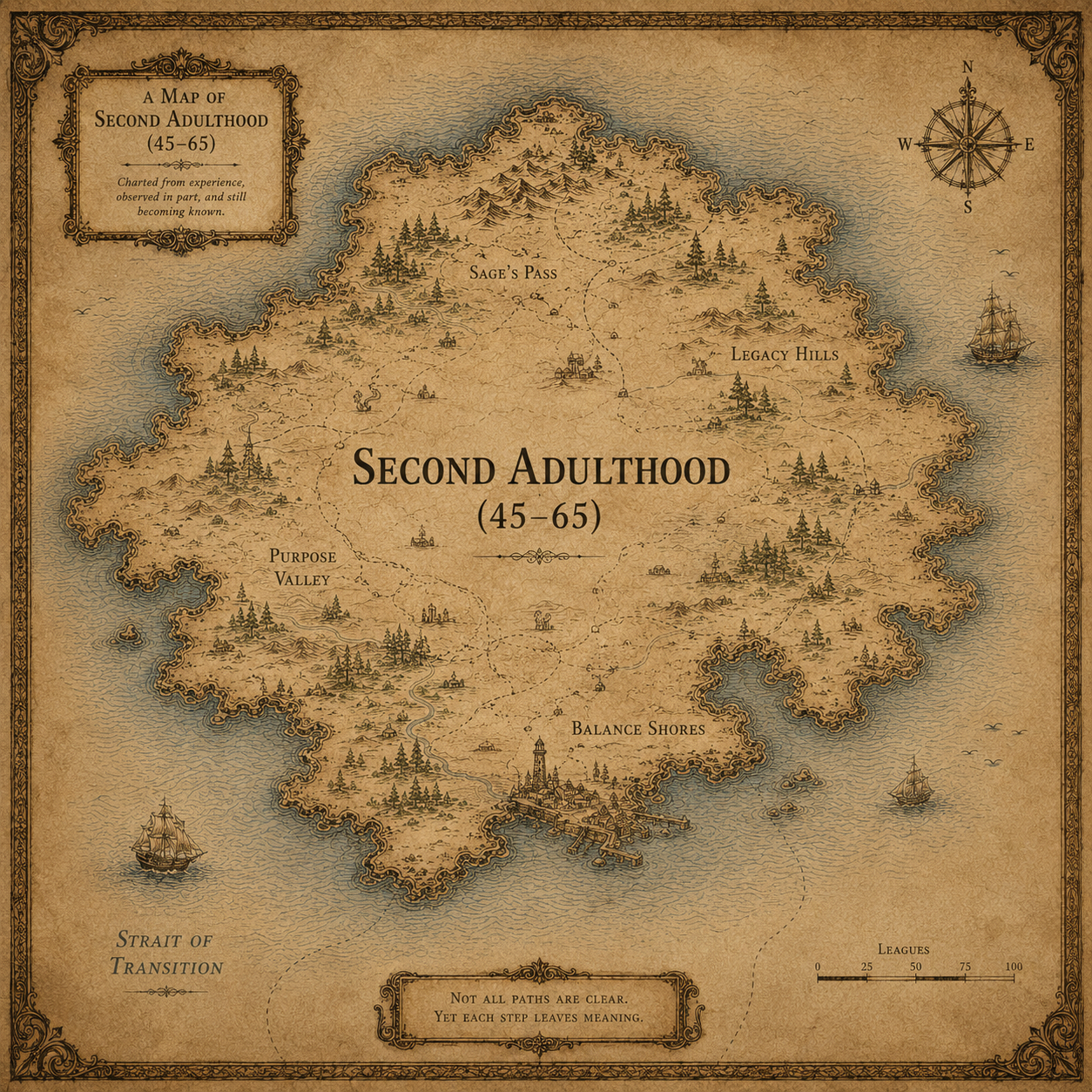
Something shifts in the mid-40s.
The culture calls it a crisis. A disruption to be managed, survived, gotten through. The leaders I work with feel it — and so did I. What's actually happening is more interesting than a crisis. And more useful.
Three winds arrive together. That's what makes this moment so disorienting — and so generative.
Physiological Wind — Energy changes. Stamina varies. Recovery takes more time. What once ran on intensity begins to run on presence, a transition that deepens steadiness and discernment at senior levels. This shift often changes how decisions are made, from fast-paced drive to steadier judgment.
Neurological Wind — Processing becomes less linear, memory less instant. Yet synthesis deepens, paradox becomes more tolerable, empathy widens, insight accelerates. This is the stage where leaders stop solving problems sequentially and begin sensing the whole system at once.
Parental Wind — Children step into their own lives. Parents need more care. For the first time, leaders find themselves fully committed to outcomes they cannot control — and discovering they can bear it. That something in them was always capable of it.
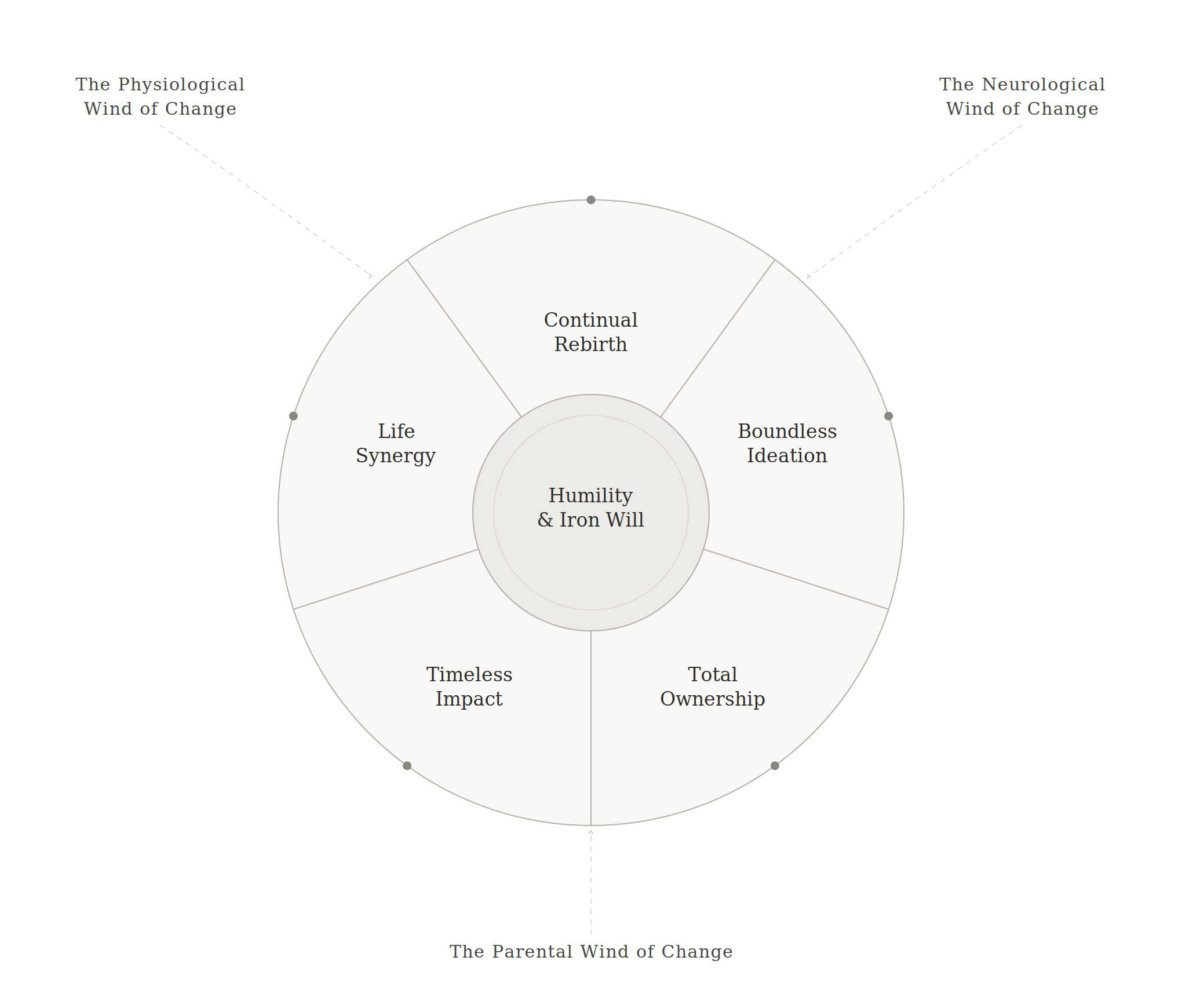
The Six Superpowers of Second Adulthood
Humility and Iron Will — Midlife loosens the ego structures that held the center in earlier decades. What emerges is a quieter strength — grounded, unforced, anchored in experience rather than assertion. It's the blend that younger leaders try to perform. At this stage, it simply arrives.
Continual Rebirth — After decades of chapters opening and closing, leaders begin to trust their own ability to reinvent. The capacity to release what no longer fits — and step into new forms without drama or urgency — has been building the whole time. Change stops being a disruption. It becomes a natural rhythm.
Boundless Ideation — As synthesis deepens and linear thinking eases, ideas come faster — often surprisingly so. Solutions arrive from unexpected directions. Ambiguity becomes more than tolerable — holding complexity without collapsing it starts to feel almost aesthetic. Creativity stops feeling like effort. It starts feeling like recognition.
Total Ownership — With fewer illusions about control, leaders take responsibility differently: fully, willingly, without defensiveness. They see the system, their part in it, and what their role demands — not from pressure, but from maturity. This ownership has weight without heaviness.
Timeless Impact — The corporate runway feels like it's ending. The life runway suggests otherwise. Squeezed between an artificial exit and decades of remaining vitality, leaders start thinking differently about impact — not what they can achieve before the clock runs out, but what they're building that will outlast the role. And what they're stepping toward that hasn't been named yet.
Life Synergy — First Adulthood ran on compartmentalization. The professional here. The parent there. The person somewhere else. At this stage, the scaffolding that kept everything separate crumbles — and with it, the need to project separateness in the first place. What emerges isn't disorder. It's integration. Decisions feel both professionally sound and personally true. Presence becomes the organizing principle.