


How long until your C-suite becomes one team?
What if they already know how?
A C-suite journey of three retreats over approximately twelve months, typically for 8–12 executives. Each retreat builds on what the team discovers and puts into practice.
What’s included:
Confidential interviews with each executive, to prepare for the first retreat, surfacing strengths and differing perspectives
Three tailored retreats, typically 1.5–2 days each, exploring collective effectiveness, relationships, and the enterprise priorities that demand shared ownership
Pre-retreat briefings and post-retreat debriefs with the CEO and key stakeholders, shaping each retreat around the team's evolving needs and discoveries
Impact measurement through Emergence Indicator assessments, typically at the beginning and end of the journey
Typically USD 120,000–150,000
For the complete twelve-month journey, including three tailored retreats, preparation and debriefings, and two Emergence Indicator assessments. Venue and participant expenses excluded.
We create a physical and conversational setting in which executives meet differently from the start.
No tables. No PowerPoint. No one at the front.
Just chairs in a circle, paper flip charts, and a space designed for the team rather than the presentation.
Before the first question is asked, the room already signals that this will be a different kind of conversation.

A discovery that reveals innate alignment.
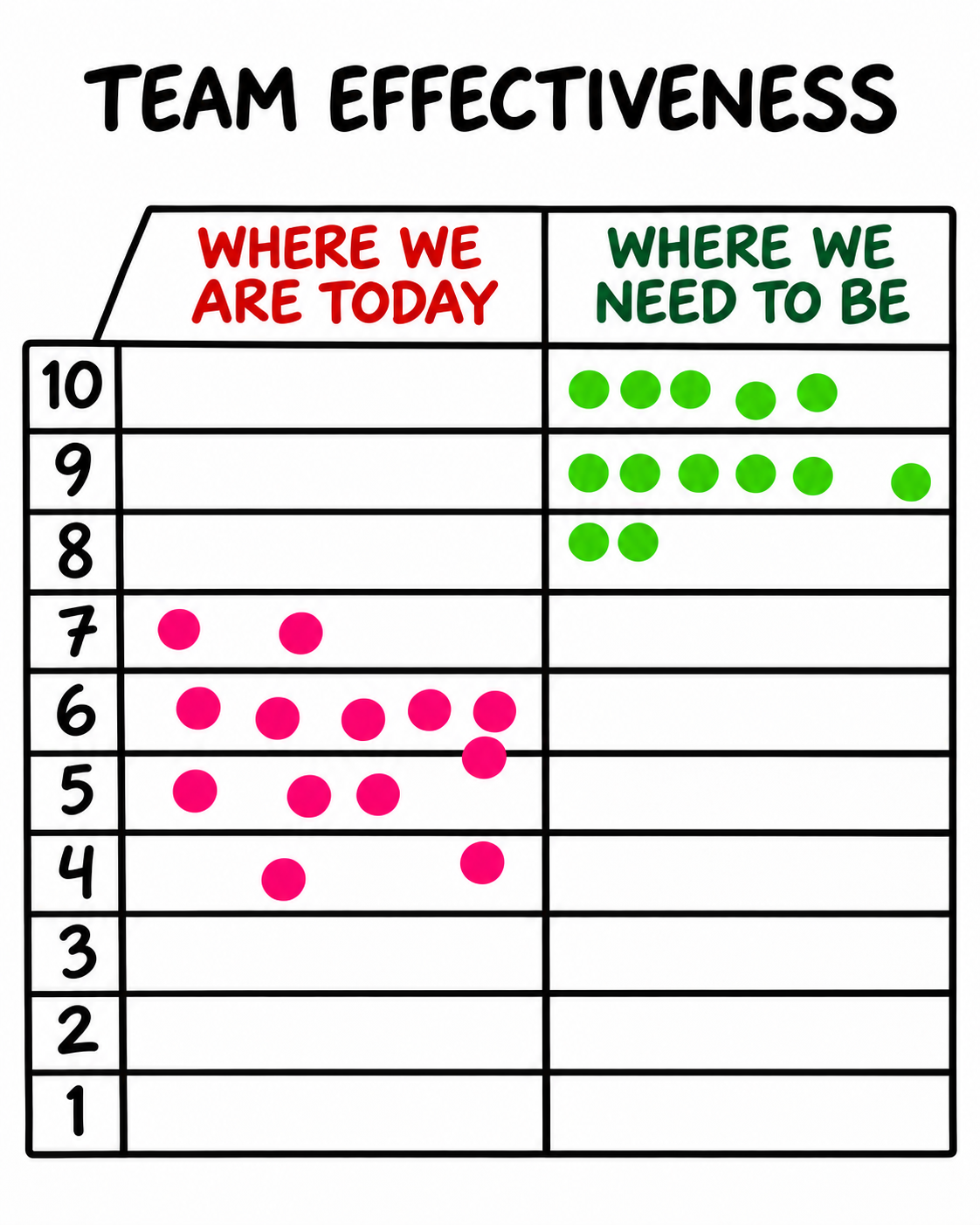
We start the first retreat with two questions: How effective are we today as a team? Where do we need to be?
Across the executive teams we've worked with, we see a remarkably consistent pattern: leaders differ in how they see the team today, yet every one of them sees the need for greater collective effectiveness. For many, this may be the first time they've seen that every one of their colleagues also wants a better team.
That realization changes how they see one another. They can begin exploring their differences knowing that everyone shares the need for something better.
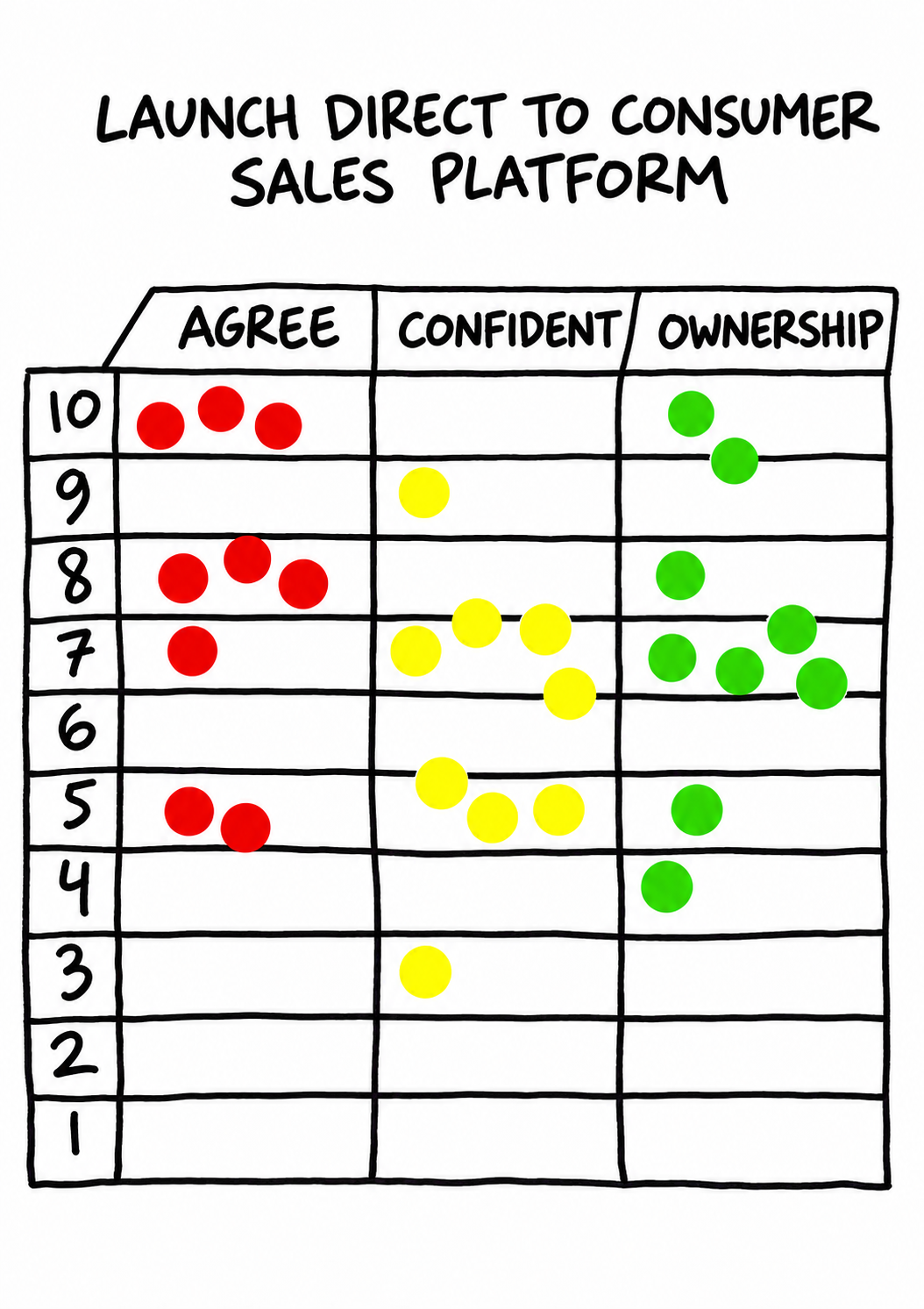
Agreement is easy. Ownership is different.
A team can agree that a strategic priority matters, feel confident about achieving it, and still differ sharply in how much personal ownership each executive feels.
Making those differences visible changes the conversation. Who is prepared to challenge a peer? Who will advocate for a priority outside their function? Who will take responsibility when no single executive has control?
The team begins moving from individual commitment to collective ownership.
Three retreats. One evolving journey.
-

See what is already here
The first retreat brings the team's strengths, differing perceptions, unspoken concerns, and shared aspirations into view. Executives encounter one another beyond their roles and begin exploring what their enterprise needs them to own together.
-

Work with what emerges
The team returns with real experience of what has changed and what has resisted change. The second retreat deepens collective judgment, candid conversations, and ownership of the enterprise's most consequential priorities.
-

Make it dependable
The team examines what now holds under pressure, what remains fragile, and what it needs to sustain. The work becomes embedded in how executives challenge, decide, support one another, and lead together.